Tuckpointing in Chicago and the South Suburbs
Mortar is the part of a brick wall that fails first. Tuckpointing is grinding the dead mortar out of the joints and packing new mortar in, so water runs off the wall instead of into it.
What tuckpointing actually is
Brick outlasts mortar. The brick on a Chicago bungalow can be a hundred years old and still perfectly sound while the mortar between it has turned to sand you can pull out with a finger. That mortar joint is what is keeping water out of the wall, and once it is gone the wall starts drinking every time it rains.
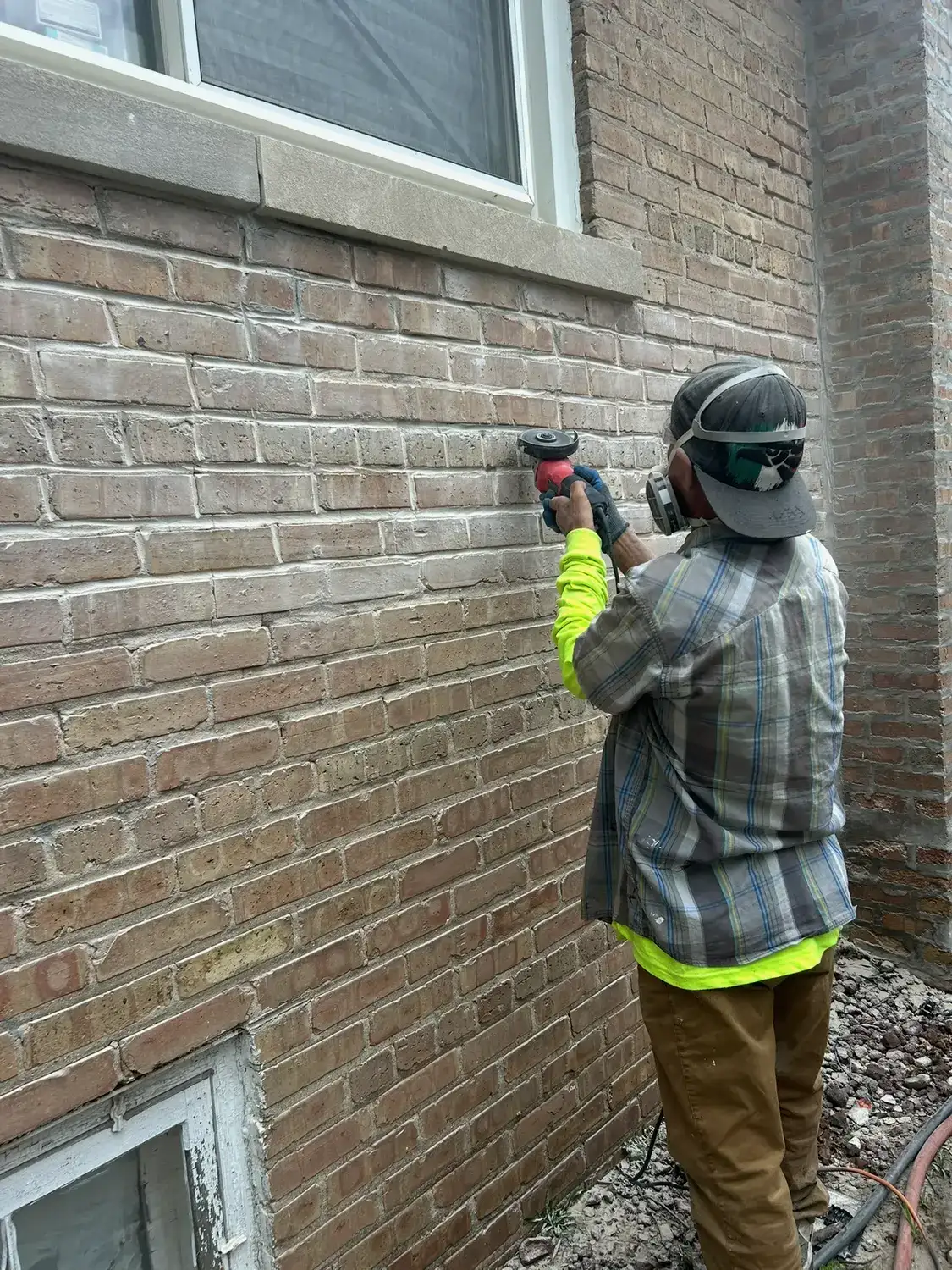
Tuckpointing is the repair. We grind the failed mortar out of the joint to a proper depth — not a skim over the top of it — and pack fresh mortar back in. Done right it disappears into the wall and lasts for decades. Done as a smear over crumbling joints it looks fine for a season and then falls out in sheets.
How to tell you need it
- Mortar you can dig out of the joint with a key or a screwdriver
- Visible gaps, or joints that have receded well behind the face of the brick
- White chalky staining running down the brick, which is minerals being carried out of the wall by water
- Damp patches on the inside face of an exterior wall, especially after a long rain
- Brick faces popping off — once water is in the wall and freezing, the brick itself starts to go
That last one matters, because it is the point where a tuckpointing job turns into a brick replacement job. Mortar is cheap to fix. Brick is not.
Spot repairs and whole houses
Both are legitimate. If one elevation takes the weather and the other three are fine, we will point the one that needs it and leave you the money.
But there is a point where patching stops making sense. We recently did a house top to bottom — every elevation, ground to roofline, ground out and repacked in one go. On that house the mortar had gone everywhere at roughly the same rate, and pointing one wall at a time would have meant coming back three more times while water kept coming in through whichever wall we had not done yet. When it is that far along, the whole envelope at once is both cheaper and the only thing that actually stops the leak.
We will tell you which of those two your house is. Forty-five years in, we are not short of work and we have no reason to sell you the big version.
Matching the mortar
New mortar that does not match reads as a scar across the front of a house, and on older buildings the wrong mortar does real damage: modern mortar is often harder than the soft brick it is packed against, and a joint harder than the brick will push the brick apart in a freeze instead of giving way itself.
We match colour and texture to what is already on the wall, and mind the strength of the mix on older soft brick. It is the difference between a repair you can see from the street and one you cannot.
After the pointing
Once the joints are sound, sealing the wall keeps them that way — but only in that order. Sealer over failed mortar traps water inside the wall and makes things worse, so waterproofing is a finishing step, never a substitute for the repair.
Get a tuckpointing price
Estimates are free and there is no obligation attached to one. Tell us what you are seeing and we will tell you what it actually needs.
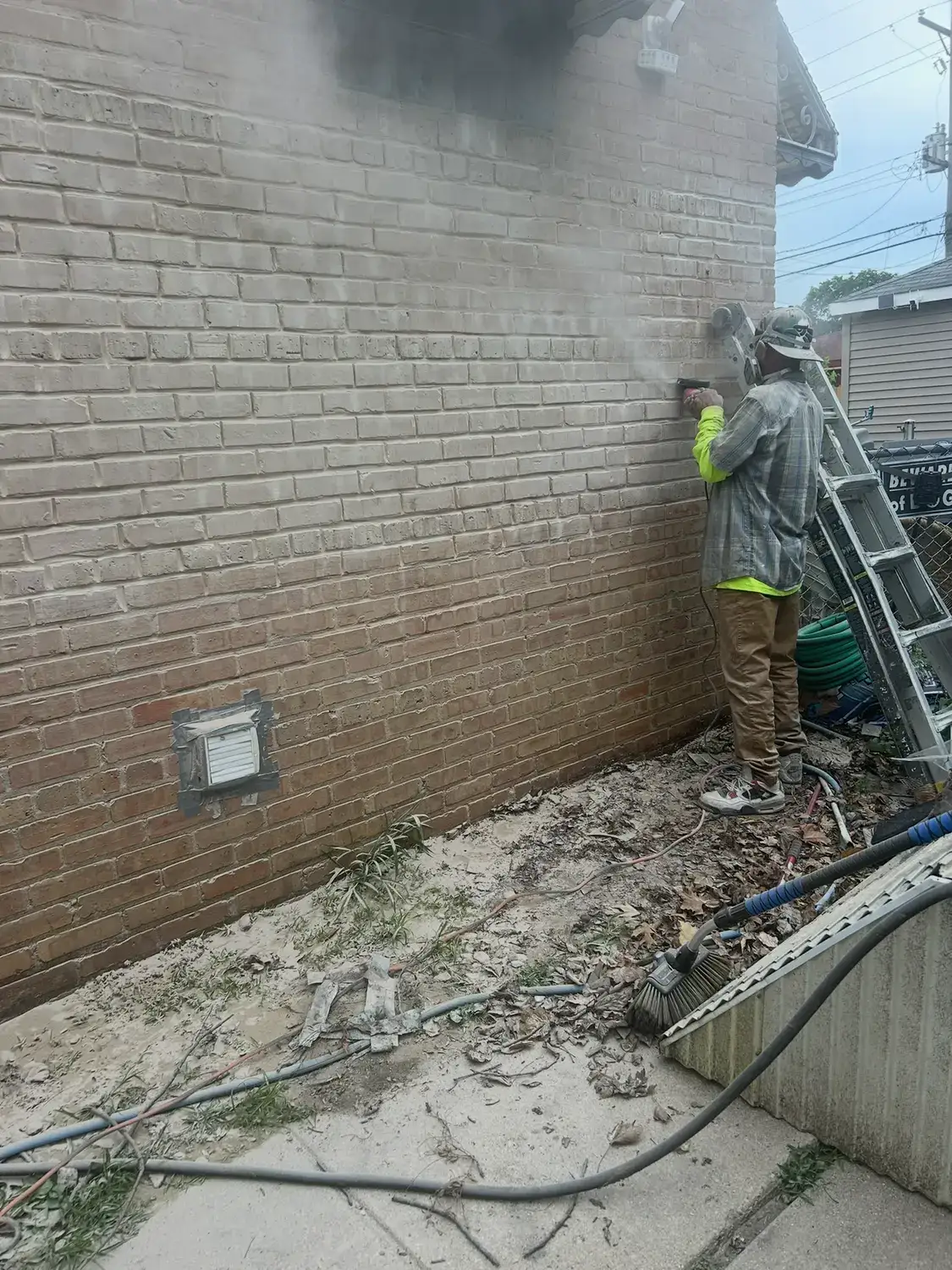
What grinding out actually looks like
This is a full tuckpointing job in Dolton. The dust is the old mortar coming out of the joints with a grinder — that is the part that makes the repair last, and the part that gets skipped when somebody smears fresh mortar over a failing joint and calls it pointed.